

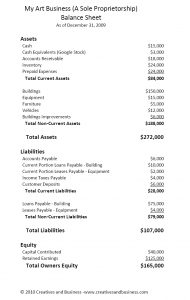
Since land is assumed to last indefinitely, the cost of land is not depreciated. Assets include the things or resources that a company owns, that were acquired in a transaction, and have a future value that can be measured. Assets also include some costs that are prepaid or deferred and will become expenses as the costs are used up over time. Represents the cumulative total of all amortization charged against intangible assets.
Assets and liabilities form a picture of a small business’s financial standing. They are non-current assets, referred to by way of capital assets, because they cannot be converted into money or consumed within 12 months from the date of purchase.
Importance of Asset Classification
These Asset in Accounting may also be classified by way of non-current assets when the future gain is expected to occur a year later. For instance, if prepaid rent is for two years, half of the amount is taken up in the books as a current asset and the other half as a non-current asset. The total figure of Current Assets is of crucial importance to management for the daily business operation. Cash equivalents take in short-term government bonds, marketable securities, bank time deposits, treasury bills, money market holdings, and commercial paper that mature in less than three months. Anything liquid and devoid of material variations in value is recorded under cash equivalents in the accounting books. Please take note that companies showing a healthy CCE or cash and cash equivalents in their Balance Sheet reflects an excellent ability to settle their short-term obligations. A company records the value of its assets on the balance sheet.
- Non-current assets are items that may not be readily converted to cash within a year.
- INVESTMENT BANKING RESOURCESLearn the foundation of Investment banking, financial modeling, valuations and more.
- Identify opportunities to apply fixed-asset changes that can help provide immediate tax savings through accelerated tax methods for depreciation, repair and maintenance expenses, and other items.
- This includes items such as inventory and accounts receivable.
A https://personal-accounting.org/’s non-operating assets may be unused land, spare equipment, investment securities, etc. Income from non-operating assets contributes to the non-operating income of a company. Non-operating assets are not necessary for funding business operations but have other peripheral value.
Descriptions of asset accounts
With no obligation to pay anybody just yet, no outflow of resources should be expected. Let’s see if the loan from Anne fits the definition of a liability. Liability is defined as obligations that your business needs to fulfill. The event needed for you to gain control of the car is you signing an agreement and paying to purchase the car or rent it.
The formula for calculating the fixed asset turnover ratio divides net revenue by the average non-current assets, i.e. the average PP&E balance between the current and prior period. Under U.S. GAAP reporting, fixed assets are typically capitalized and expensed across their useful life assumption on the income statement.


Comments Closed
Comments are closed.